 |
| YOU ARE HERE : North India Travel Packages > Monuments in North India > Agra Fort, Agra |
Agra Fort, Agra
Agra Fort is located on the banks of the Yamuna near the railway station. Agra is well connected by air with Khajuraho, Varanasi and Delhi. It has good rail and bus connections with major Indian cities. From the city, there are taxis, 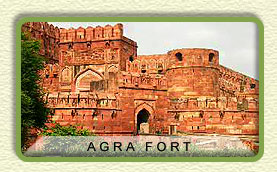 tempos, auto-rickshaws, and cycle rickshaws to carry one to the fort. Prepaid taxis and autos from the railway station are also available. Bicycles can also be hired on hourly basis.
The high red sandstone ramparts of this great monument stretch for almost 2.5 kilometres, dominating a bend in the river Yamuna. Emperor Akbar laid the foundation of this majestic citadel and it developed as a stronghold of the Mughal Empire under successive generations. Shahjahan constructed the graceful Diwan-i-Am or the Hall of Public Audiences, made of red sandstone, in 1628. Three rows of white polished stucco pillars topped by peacock arches support the flat roof. Today, this Hall is bereft of brocade decorations, silk carpets and satin canopies that would have enhanced the elegance of the settings when the Emperor sat down with his subjects to hear their complaints.
Even though public access is limited to the southern wing of the fort, it is more than enough to get a feel of the glorious Mughal period. It may be mentioned that this fort was the very place where his son Aurangzeb imprisoned Shah Jahan for 7 years till his death. The fort houses some very elegant halls and royal pavilions, the Diwan-i-Aam and the Diwan-I-Khas halls being the most important ones. The fort also has some very beautiful mosques and palaces that were mostly built by Shah Jahan. The Sheesh Mahal and the Khas Mahal are two of the most beautiful palaces within the fort. Don't forget to have a look at the Anguri Bagh (the Grape Garden), which is really a treat to the eyes. The Mussaman Burj tower, which boasts of a beautiful marble balcony, is another place to be visited within the fort. The most touching aspect of this place is that Shah Jahan breathed his last here as he continued to gaze at his beloved wife Mumtaz Mahal's tomb, the Taj Mahal.
Diwan-e-Am
This structure was originally made out of wood but was later constructed in the present form by Shah Jahan. The throne room bears a clear influence of Shah Jahan style with the inlaid carvings and panels of marble with floral motifs. This hall of public hearing is the place where the Emperor heard the petitions of the public and met the officials. The hall of public hearing gives way to the Nagina Mosque and the Ladies bazar where only ladies merchants were allowed to sell items to the Moghal ladies.
Diwan-e-Khas
This was the hall of private audience. This hall was also added by Shah Jahan. This hall is divided into two rooms connected by three arches and it was here that the famous peacock throne was kept before being shifted to Delhi by Aurangzeb and finally carried away to Iran.
Moti Masjid
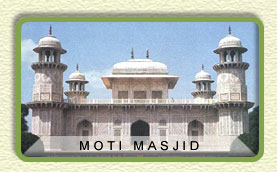 Moti Masjid is situated to the right of Diwan-E-Aam of the Agra Fort. One can see the domes of the Moti Masjid, which is the prettiest of all the buildings at Agra Fort. Moti Masjid is a white marble structure built by Shahjahan for his family members and court chiefs. Moti Masjid made out of white marble is one of the ancient mosques situated in Agra. It used to shine like a pearl once upon a time and hence the name.
Mina Masjid
Just above the Sheesh Mahal is situated the Mina Masjid, which is believed to be constructed by Shahjahan for strictly private use. The Mina Masjid is enclosed on all the four sides by high walls. The marble mosque has three small arches in its facade, which are plain and unadorned.
tempos, auto-rickshaws, and cycle rickshaws to carry one to the fort. Prepaid taxis and autos from the railway station are also available. Bicycles can also be hired on hourly basis.The high red sandstone ramparts of this great monument stretch for almost 2.5 kilometres, dominating a bend in the river Yamuna. Emperor Akbar laid the foundation of this majestic citadel and it developed as a stronghold of the Mughal Empire under successive generations. Shahjahan constructed the graceful Diwan-i-Am or the Hall of Public Audiences, made of red sandstone, in 1628. Three rows of white polished stucco pillars topped by peacock arches support the flat roof. Today, this Hall is bereft of brocade decorations, silk carpets and satin canopies that would have enhanced the elegance of the settings when the Emperor sat down with his subjects to hear their complaints.
Even though public access is limited to the southern wing of the fort, it is more than enough to get a feel of the glorious Mughal period. It may be mentioned that this fort was the very place where his son Aurangzeb imprisoned Shah Jahan for 7 years till his death. The fort houses some very elegant halls and royal pavilions, the Diwan-i-Aam and the Diwan-I-Khas halls being the most important ones. The fort also has some very beautiful mosques and palaces that were mostly built by Shah Jahan. The Sheesh Mahal and the Khas Mahal are two of the most beautiful palaces within the fort. Don't forget to have a look at the Anguri Bagh (the Grape Garden), which is really a treat to the eyes. The Mussaman Burj tower, which boasts of a beautiful marble balcony, is another place to be visited within the fort. The most touching aspect of this place is that Shah Jahan breathed his last here as he continued to gaze at his beloved wife Mumtaz Mahal's tomb, the Taj Mahal.
Diwan-e-Am
This structure was originally made out of wood but was later constructed in the present form by Shah Jahan. The throne room bears a clear influence of Shah Jahan style with the inlaid carvings and panels of marble with floral motifs. This hall of public hearing is the place where the Emperor heard the petitions of the public and met the officials. The hall of public hearing gives way to the Nagina Mosque and the Ladies bazar where only ladies merchants were allowed to sell items to the Moghal ladies.
Diwan-e-Khas
This was the hall of private audience. This hall was also added by Shah Jahan. This hall is divided into two rooms connected by three arches and it was here that the famous peacock throne was kept before being shifted to Delhi by Aurangzeb and finally carried away to Iran.
Moti Masjid
Moti Masjid is situated to the right of Diwan-E-Aam of the Agra Fort. One can see the domes of the Moti Masjid, which is the prettiest of all the buildings at Agra Fort. Moti Masjid is a white marble structure built by Shahjahan for his family members and court chiefs. Moti Masjid made out of white marble is one of the ancient mosques situated in Agra. It used to shine like a pearl once upon a time and hence the name. Mina Masjid
Just above the Sheesh Mahal is situated the Mina Masjid, which is believed to be constructed by Shahjahan for strictly private use. The Mina Masjid is enclosed on all the four sides by high walls. The marble mosque has three small arches in its facade, which are plain and unadorned.
 |
| Recommended Tour Itineraries |
| -->
Delhi Agra Jaipur Tours Duration : 7 Days / 6 Nights Destination Covered : Delhi - Agra - Jaipur - Delhi --> Taj Mahal Tours with Goa Beaches Duration : 9 days / 8 nights Destination Covered : Delhi - Agra - Fatehpur Sikri - Bharatpur - Jaipur - Goa - Mumbai --> Royal Rajasthan Tour Duration : 13 Days / 12 Nights Destination Covered : Jaipur - Nawalgarh / Mandawa - Bikaner - Jaisalmer - Jodhpur - Udaipur - Jaipur - Agra - Delhi |
| North Indian Tourist Destinations |
| Hill Stations in North India |
| Wildlife Attractions In Northern India |
| Guide to Forts & Palaces |
| Pilgrimage Destinations In Northern India |